
As the local elections approach, the prelude to the electoral campaign is already being felt. Some parties have started it either with populism or with political scandal. In this context, Mayor General Ion Ceban is preparing for a third term. He is betting on the image of the "doer" who "does it", whom the "Government prevents" from exercising his duties. In reality, however, beyond the abundant communication on social networks and the city's wallpapering, the substantive problems of the "second Romanian city" have remained largely unresolved. One of them has persisted for years and worsens from one season to the next: the problem of the maidans. They have transformed apartment building courtyards, parks, and children's paths to school into a territory of insecurity.
Frequency of attacks
Official data shows the scale of the phenomenon. According to the National Agency for Public Health (ANSP), in 2025, 4.495 cases of aggression by stray animals were recorded nationwide, of which 2.171 only in Chisinau municipality. In the same year, over 3.100 residents of the capital requested anti-rabies assistance, and in about 70% of cases the aggressors were stray dogs. This means, on average, about six cases of aggression per day. The year 2026 did not bring any improvement, on the contrary. In the first three months, almost 840 people were recorded as being attacked by animals, compared to 617 in the same period last year, that is, an increase of over 35%. Children remain the most exposed: 133 cases, compared to 108 in the same period in 2025. In July and August 2026 alone, at the national level, 1.531 people needed post-exposure anti-rabies treatment. All this is happening in a city where, according to official estimates, approximately 5.000 stray dogs live on the streets, a number that even the authorities cannot establish with certainty.
Legal framework
But who is ultimately responsible for this situation? Law No. 256 of July 10, 2025 on the protection of companion animals is the first framework law of this type in the history of the Republic of Moldova. It explicitly regulates the responsibility of the authorities that manage stray animals. It provides for a National Program for capturing, sterilization, vaccination and microchipping and obliges local authorities to form animal control and protection teams. It is true that the law will enter into force only in September 2027. However, its absence did not leave the capital without powers.
The Chisinau Municipal Council approved its own regulation on the management of the stray and stray dog population. The regulation establishes that the dog population management service is organized "through the care and coordination of the local public administration", including the capture of animals from public spaces.Moreover, the City Hall has a Section for Animal Control and Protection, within the General Directorate of Communal Housing and Development, and a specialized municipal enterprise, Î.M. "Animal Supervision and Protection".
However, on June 2, 2026, when asked by TVR Moldova about the increase in the number of attacks, Ion Ceban stated that "there is no legal framework in this regard". The statement is evasive for a mayor who has a regulation, a specialized department, a municipal enterprise and a budget at his disposal. The problem is that the legal instruments exist, but the results are lacking, and the responsibility is passed from one institution to another. Even the ANSP stressed that public health measures are not sufficient without the involvement of local public authorities. Ruslan Darie, director of the Ministry of Animal Supervision and Protection, spoke of "no less than 1.500 animals" captured, sterilized and vaccinated. The data remain modest in relation to a canine population of thousands of specimens, and the scale of the phenomenon shows that the measures applied so far have failed to keep the problem under control. The promises are not new either. Since 2021, former interim mayor Ruslan Codreanu has publicly recalled that Ion Ceban had promised an asylum in each sector..
Personal documentation
Beyond statistics, the reality is best seen at the level of a single apartment building yard. Since April 2026, I have been following discussions in the tenant groups in the sector where I live. One tenant tells how, a few weeks ago, a pack attacked a woman. She fell to the ground and desperately tried to chase the dogs away with a bag, until a passerby came to her aid. A neighbor warns that the animals "attack everyone" who walks with bags past the nearby store. Other residents write that students returning from school, high school or the public transport station are forced to cross the yards where the packs are. A representative of the tenants' association admits that he has sent several letters and discussed with the authorities, "but there is no reaction". Under these conditions, he suggests that the neighbors each send a petition to the responsible institutions.

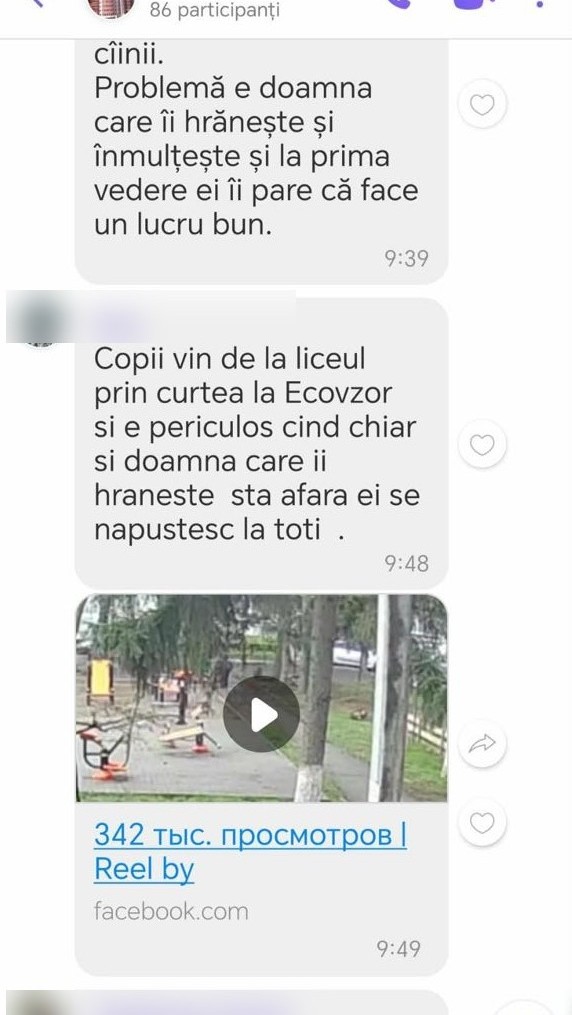
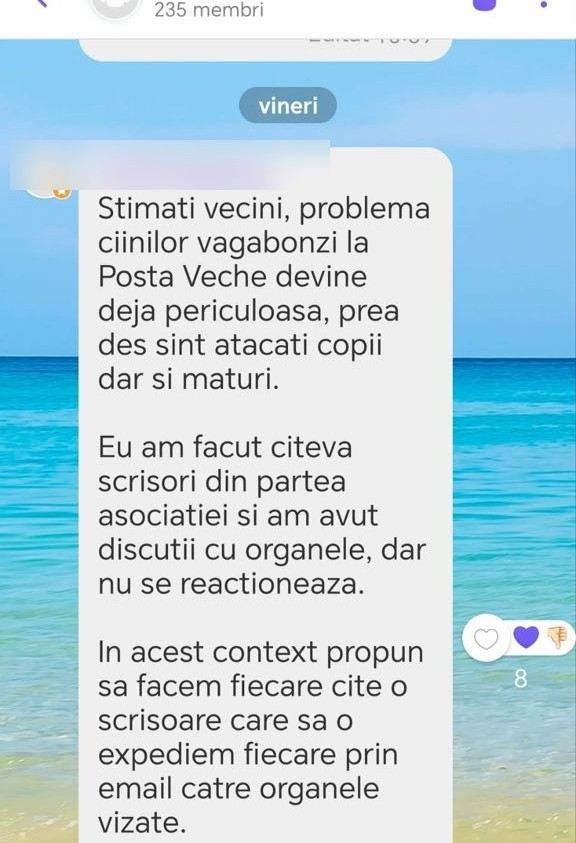
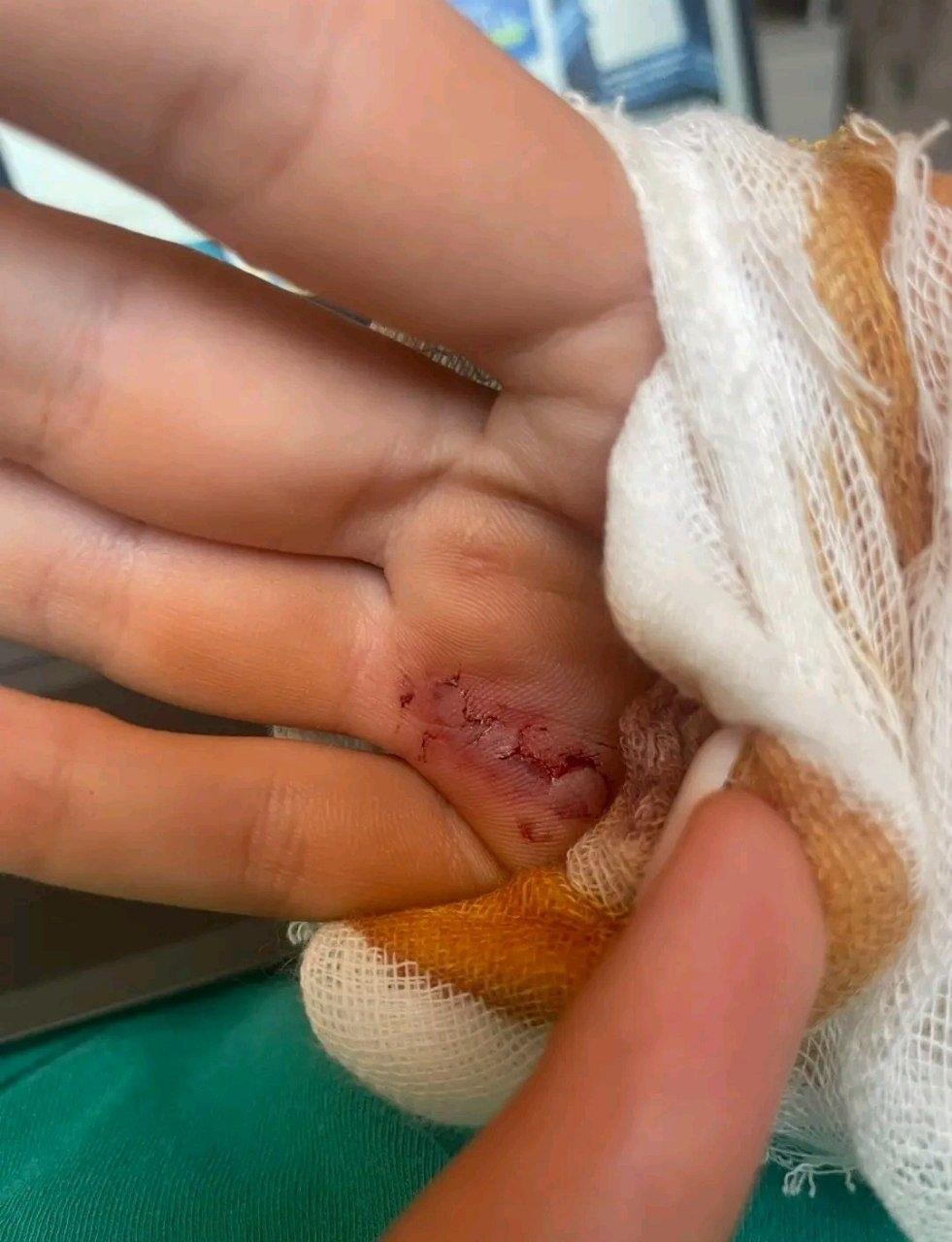
The cases do not remain at the warning level. An acquaintance of mine was recently bitten on the hand, just a week after the attack on another close person. And this week, on one of the alleys of a very frequented park in the capital, I observed how a pack of ten dogs pounced on a passerby. It is proof that the phenomenon does not concern a single neighborhood, but the entire city.
Instead of conclusions
As a resident of Chisinau, I request the intervention of the "housekeeper" Ivan Ceban to manage this problem. The city's priority must be the safety of ordinary people, especially those vulnerable to stray dogs. The solution to this problem must not be the euthanasia of animals, but the creation of new shelters and their systematic sterilization, through a coherent program, with clear objectives and measurable results. Finally, before asking Chisinau residents for a third term in 2027, the mayor should ensure that the disastrous situation in the capital is managed professionally.
Video

