INTERVIEW EXCLUSIVE Claudiu Năsui: "I would vote YES for Union! I would campaign" / What he says about debureaucratization, the development of entrepreneurship, the defense industry in the context of neutrality, increasing cybersecurity and the accession of the Republic of Moldova to the EU

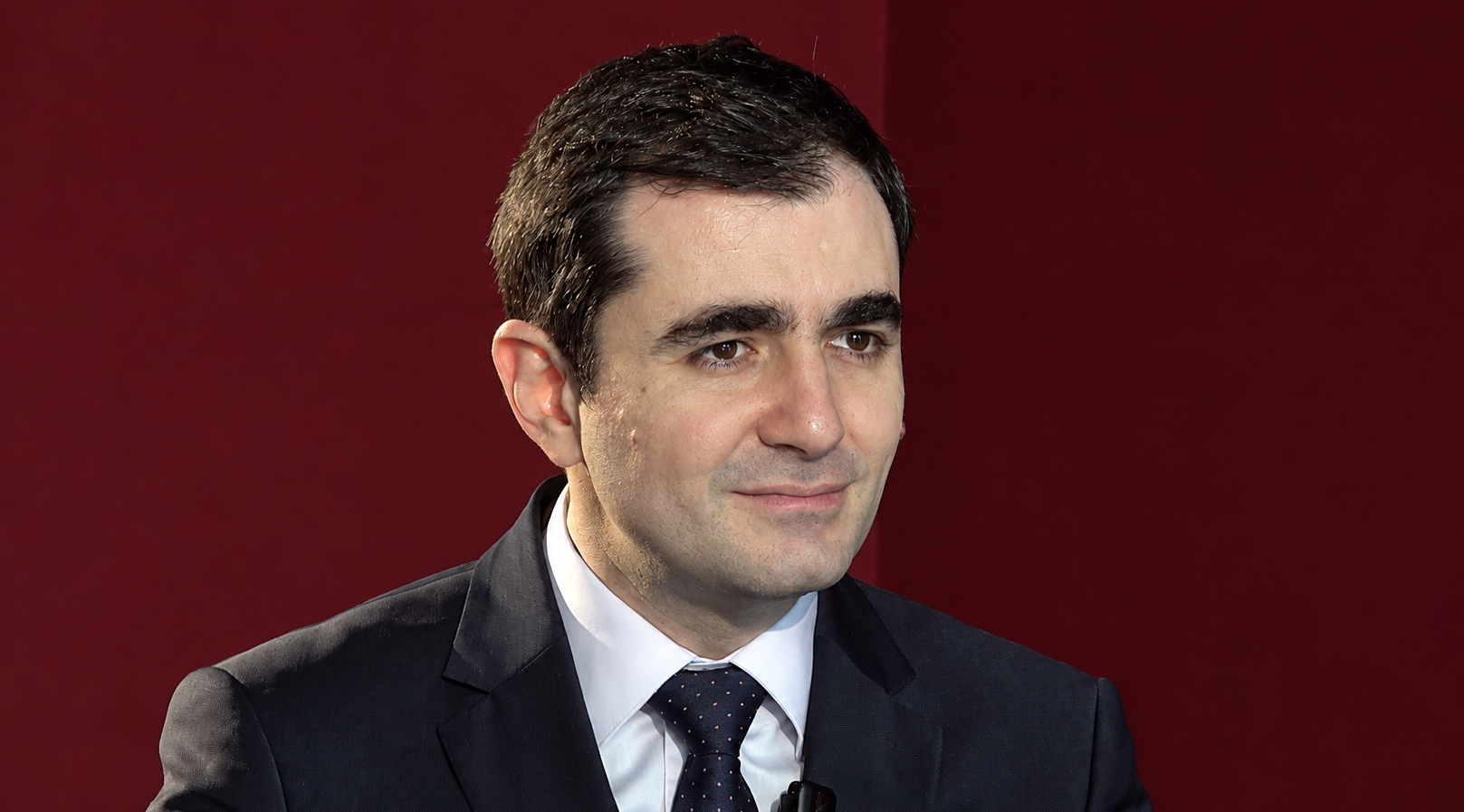
Two months after taking office as Minister of Economic Development and Digitalization of the Republic of Moldova, Claudiu Năsui speaks, in an exclusive interview with Cotidianul Md, about his plans to debureaucratize and stimulate entrepreneurship, his liberal vision of the economy, the development of the defense industry and the strengthening of cybersecurity. In the interview, he also addresses the prospects of Moldova's accession to the European Union, but very importantly, he talks about the benefits of a possible Union with Romania, declaring that he would campaign for the Union and, implicitly, would vote "YES" in a referendum in this regard.
Viorica Tataru: You were sworn in two months ago. Since then, you haven't communicated much in public. How was the adaptation period for you?
Claudiu Nasui: I chose to first focus very hard on understanding the ministry, on understanding the things that are already being done, so that there is a certain continuity, but also on starting new projects. I didn't want to go out in public communication and criticize, to say what can't be done, but what can be done.
So, that's why we've been working for the last six weeks on the de-bureaucratization packages, which Prime Minister Tofan requested since the first Government meeting. And we've been working especially on a new concept and a fairly radical change in philosophy: for small businesses to have no need for bureaucracy.
Why? This is a European concept. If bureaucracy has a cost, it can be borne by those who are large. When you are large, when you are a company that produces, for example, hundreds of thousands of hectoliters of beer, or when you are a large manufacturer of furniture, video cameras, whatever, you can support bureaucracy. You have a large volume, you have a large turnover, you have larger amounts and you can support some fixed costs, but when you are small and you are at the beginning of the road, those fixed costs can mean that, in fact, you are not allowed to undertake, you are not allowed to work.
And it's a shame, because you don't know where a good and productive entrepreneurial idea comes from. In this sense, we came up with this idea called "Start". That was the very name given by the prime minister. When I told him, he said let's call it "Start", because it's exactly about the starting point of an entrepreneurial initiative.
The concept assumes zero bureaucracy if you want to start a business in Moldova. You pick up the phone and register. The registration systems are already made by ASP. ASP is a state institution that I like more and more as I learn more about its activity. Mr. Mircea Eșanu did an extraordinary job there. Basically, you pick up the phone, register and start right away.
Until now, you needed permits, approvals, licenses, certificates, approvals, depending on what you want to do, obviously. And we said it this way: in the case of a series of permits, you no longer need them, but you can start directly if you are small.
For example, we can talk about home cooking. If someone wants to make cozonac or jam at home, let them do it, under a certain amount, which we have defined as the VAT threshold, because it is easy to use, everyone knows it, it is already regulated in legislation.
It's about being allowed to start an entrepreneurial activity, without having all the rules that are normally required beforehand, during inspections, and which leads people to carry out the activity illegally or not to carry it out at all.
So, we did the following: we looked at other European countries, and in this case the example to follow is France, which is often not an example of debureaucratization, but in this case, in my view, it is. France has very permissive legislation for home gastronomy. We are taking the model from them.
There are regulations from the European framework that had not been transposed in the Republic of Moldova and we are now transposing them for home gastronomy, so for home-made food, which are almost the same as those intended for ambulatory trade, respectively with food. You know, when there are public events, there are also stalls with things made at home, including food. Those are regulated, they are not unregulated. It does not mean that you can have a dirty counter, it does not mean that you can do things that are bad. But there are some common sense regulations. For example, you should not need seven sinks, seven refrigerators, things that are excessive. Thus, we adapt exactly those European regulations, we apply them in the Republic of Moldova and let the citizen try.
So, anyone who has an idea can try it almost immediately! Make a few clicks and start doing business. You don't need an accountant, you don't need tax returns, you don't need to file a balance sheet or anything like that. Taxes will be calculated directly from your bank account.
Bureaucracy comes into play if you want to have a cash register, to take out cash. Then yes, you have to do the cash register bureaucracy. If you want employees, you have to make an employment contract, you have to respect labor legislation. But that only happens if you want to grow, but if you just want to start a company, to try and you want to do everything through the bank, you need almost no contact with the state, except for the initial registration. I think this will contribute a lot to the emergence of these buds of entrepreneurship, namely to have an economy that works from the bottom up.
Viorica Tataru: Did you encounter any problems during this decision-making process?
Claudiu Nasui: When you are at the beginning of a mandate, you have a different momentum. The Tofan Government is, from a perspective, at the beginning of a mandate. I am even at the beginning, because I came later. Thus, certain institutional asperities were easier to overcome.
As time passes, institutions that focus more on bureaucracy may get used to it, adapt to the Government's style, and be able to put certain brakes on it more easily.
On the other hand, things went well this time. The draft law is on the Government's approval circuit, then it will reach the Parliament, and then the parliamentary process will follow, in parliamentary committees, a vote in the first reading, a vote in the second reading and hopefully then the promulgation will follow. From that moment on, we will be able to say that Moldovans will be able to do entrepreneurship without bureaucracy, especially at the small level.
I would like to mention one more thing. In general, and I have seen this in Romania as well, politicians are reached by large corporations. The small entrepreneur does not reach, because he has a lot on his mind. As a small entrepreneur you have to take care of buying raw materials, opening the counter, you have a lot of things to do, you have a lot of problems.
The more businesses grow and become larger corporations, the more they can hire dedicated people to contact mayors, parliamentarians, ministers, the Government, and state institutions as a whole. Thus, in many situations, including bona fide politicians, the problems of the big guys reach them. There are problems that I am not saying should not be solved, but should be solved, and in this regard, I have met, in turn, with several large companies in the Republic of Moldova. So, I am not saying that these problems should not be solved, because solving them will do the economy good. However, this predominantly helps the economy from the top down.
But if you want to have a healthy economy, there must be many and small ones that grow. And you don't know who will grow, and you don't need to know who will grow. The market has to decide, consumers have to decide, to choose the services of one or the other, to choose the products of one or the other.
In this way, whoever knows how to develop more, to do something different, to adapt to what consumers want, prevails. This is, in fact, a healthy economy.
So, I don't mean that we won't debureaucratize at the top, but we have to start from the bottom up. This is an issue that I would say is more innovative in politics.
Viorica Tataru: Many were initially afraid that you were too radical a politician, that you were coming into Moldovan politics with a chainsaw. In this context, how do you explain to citizens the advantages of liberal policies?
Claudiu Nasui: Do you know how radicalism works? There's a saying that Berry Goldwater said: "Extremism in defense of freedom is not a vice, and moderation in defense of justice is not a virtue." I give the example of Ukraine because it's handy. If someone comes and says "let's not be so extremist about Ukraine, because maybe it's both the fault of some and the fault of others, and the truth is somewhere in between," it seems balanced. But that's not true, it's false.
In the case of Ukraine, it's the clearest. Some are clearly aggressors, committing barbarism, killing children. These are absolutely unacceptable things. Wanting to be moderate in such a situation actually means wanting to be on the side of the criminal.
And I would say that this is exactly what applies to economics. An idea that is bad for the economy and bad for society should not be implemented.
In the panoply of ideas we have these two extremes, respectively currents. Either you are more liberal, or you are more socialist. When you are more liberal you want to give more power to the people, to the citizens, and it is about respecting private property, but when you are more socialist, you want to give more power to the state, to the central planning bodies, you put the emphasis on public property rather than private property, including regarding companies, land and other things.
History has shown us what the application of these trends leads to. Moldova, Romania, Eastern Europe as a whole have tested socialism, they have tested the state economy, some countries to a greater degree than others. Poland, the Czech Republic, Slovakia had a much milder socialism than Romania and the Republic of Moldova, which was part of the USSR. Thus, the extremism in saying that that path is wrong and that if we want prosperity we must go the liberal path, seems to me to be a healthy radicalism and I will not renounce it.
That's why I supported Javier Milli in Argentina, but not so much as a politician – because, yes, I also find him a little exuberant, and I think he does some things that I would disapprove of – but on the economic side and the ideas that he has applied to the economy, because that's where the chainsaw comes from, I think he is doing the right thing. In two years he has halved poverty, and Argentina is already a country that has prospects that no one could even imagine before his government began.
This is happening because it has adopted a better system. A better system makes an absolutely colossal difference. I would also support this for the Republic of Moldova. And I think that is what Prime Minister Tofan supports. This is one of the reasons why I came and why I was happy to come with Mr. Tofan.
Viorica Tataru: Can we say that in these extreme times we need radical measures?
Claudiu Nasui: We need courageous measures. Otherwise, people will leave, they will go to work in other places. They still send money home and it is very good that they send, but they produce in another country. This is the consequence of not applying the solutions. As a consequence, I come and say: let's apply the solution, even if it may seem radical.
The key question is: when do we want to get better? Our lives are finite. Don't we want to live better at some point? Look, I was in politics in Romania for 10 years and I saw many missed opportunities, including in the Government I was part of in Bucharest.
And it's a shame, because, I repeat, our lives are finite. Yes, we can miss a train, another one will come, there will be another opportunity, but we don't know when, and at some point, after you keep missing opportunity after opportunity, your life ends. Ok, maybe your children will catch a good time, maybe your grandchildren will catch a good time, but it's a shame... Why don't we do some things now that would improve our lives?
So, I don't think it's radicalism. I think it's brave thinking, and countries would benefit from being more liberal.
Viorica Tataru: Let's change the register of the discussion slightly. What role does your ministry play in the development of the defense industry, especially the anti-drone defense systems industry?
Claudiu Nasui: For now, it doesn't really have one. And it seems to me that in this context we have a word that has been very misunderstood: neutrality. I was told that the Republic of Moldova doesn't have a defense industry because it is a neutral country.
Being neutral doesn't mean you have to be unarmed. Being neutral doesn't mean you have to be harmless. Being neutral doesn't mean you have to be a sure victim. Switzerland, which is probably the most famous country in the world for neutrality, is armed to the teeth. And it doesn't have a potential aggressor in its vicinity, meaning France and Italy aren't going to attack it anytime soon.
So, yes, we need to develop this defense industry. Madam President has already talked about these things. And I can tell you that since I came, we have seen a project, we have been working on it, we are ready to improve it, and after we receive a few political approvals, the Republic of Moldova will have a defense industry.
Viorica Tataru: Will drones still be produced?
Claudiu Nasui: I don't mean drones. I mean it will have a defense industry. Then, it remains to be seen, but if you ask me, drones are a new component in the arsenal that needs to exist.
Viorica Tataru: Given the recent cyberattack, what measures are being taken or what measures will be taken? Does the Republic of Moldova also benefit from external support in strengthening cybersecurity?
Claudiu Nasui: Yes, the Republic of Moldova is already benefiting. In the six weeks that I've been here, I've had this grant from the United States, which came specifically for a cybersecurity center. And it's a grant. It's funding from the American taxpayer to support us. I'm very grateful.
And I'll tell you one more thing. On this cybersecurity side, we also need to have the support of larger entities. I'm not just referring to states. There are corporations, banks and other private entities in the West that have cybersecurity departments that are probably funded more and more generously than the Republic of Moldova will be able to fund its cybersecurity.
These entities are resisting attacks by state actors, because you know, these hostile state actors are not just attacking states. They are also attacking privately owned infrastructure, like banks, like energy companies and other sectors. And these private entities are resisting.
So, we need to somehow integrate ourselves more into these circuits, not insist on doing everything ourselves, but be able to integrate with entities from friendly countries that carry out cybersecurity operations, perhaps on a larger scale and with more money than us.
Regarding the recent cyberattack we are talking about, the most prudent thing is to wait and see what happened. For now, we do not have a clear report. When we do, we will present it. Right now, I do not have a clear report on the breach exploited by the attackers.
But what I can tell you from what I've learned so far in these few weeks is that the Republic of Moldova is under constant assault. So this is not the first attack. The pro-Russian propaganda claims that this is the first attack and that the authorities have not coped with it, but the Republic of Moldova is, in fact, under constant attack.
This is an attack that succeeded. You can't be constantly under attack without, at some point, the attacker being able to find a breach. This is the situation in the Republic of Moldova and, unfortunately, they found a breach. They don't find it only here, they find it in other countries too. A month ago, 8,8 million personal data were stolen in Denmark, also from the state. It's probably the same hostile state actor, which wouldn't surprise me.
These things happen, especially in the age of artificial intelligence, which can be used to carry out much more effective attacks. And defense can be made more effective. It depends in this case on who has the better technological model.
And, in the current situation, before taking action, we need to notice what went wrong. Otherwise, we risk ruining what was working.
Viorica Tataru: Could Romania provide additional support?
Claudiu Nasui: It already does. Knowing Romania, I think it would be useful for both Romania and the Republic of Moldova to integrate into some broader solutions. We are still too small countries to resist this roller, if it focuses on us.
And I think there are countries like Estonia that are already doing some things that maybe we should emulate more. But, again, let's see the results of the survey.
Viorica Tataru: You recently wrote a post in which you used the phrase “a country divided into two states.” Do you support the unification of the Republic of Moldova with Romania?
Claudiu Nasui: I feel at home in Chisinau. And I say it in the most proper way. It doesn't seem to me that the differences are that big. And it seems to me that, de facto, the rapprochement is already there and it remains a political matter.
Yes, I said that we are one country divided into two states, because that is what we are. That is evident. History has caused the political borders to be drawn in a certain sense, but that does not change the reality, it does not change the cultural reality.
And yes, if there were a referendum soon, I would campaign and vote "YES" for the Union, both on one bank of the Prut and the other. I think it would be good for both Romania and the Republic of Moldova. It is not a matter of only one benefiting and the other paying, as a certain part of the propaganda tries to put it.
Viorica Tataru: What economic benefits would the Union bring to the citizens of the Republic of Moldova and Romania?
Claudiu Nasui: Much greater integration and, for example, there would be no more queues at customs. This is one of the problems that the Tofan Government is trying to solve. And now, on the occasion of the visit of the Luca Niculescu Government to the Republic of Moldova, we talked about this and the feeling is that the rulers in Bucharest are really interested, in turn, in solving this problem, precisely to allow trade flows, import-export, to take place more. This is one aspect.
Secondly, freedom.
Thirdly, safety.
Fourth, lower country risk. And I want to say that people don't realize how safe the Republic of Moldova is. The Republic of Moldova is a safe country. And now I'm saying something that I believed in myself and I don't want to exonerate myself. When you look at the map and say that there is Transnistria, that we have the Russian army there, and in the vicinity there is the war in Ukraine, it seems that the risk is much greater, because the Republic of Moldova is not in NATO, it is not in the EU.
Now, EU integration, potential union with Romania and all these things would significantly reduce country risk. And when you have lower country risk, you actually have more investments. And when you have more investments, you have, for example, a bidding on people, on a larger workforce. That means higher salaries. That means a whole domino of beneficial economic things.
So that would happen in the short term. And in the long term, you know how it is, we are stronger together.
Viorica Tataru: How do you see the collaboration with the Government in Bucharest, considering that it has a different political coloration than that of the party you come from?
Claudiu Nasui: You should know that in the last 10 years, while I was in the Romanian Parliament, almost all the political initiatives I had, the bills for debureaucratization, regarding the increase of economic freedoms, were together with the PSD. I had them together with colleagues there and we got along very well.
And on the occasion of the visit of the Romanian Government to Chisinau, I got along very well and it seems to me that if Mr. Neacșu manages to implement the plans he has outlined, and I wish him much success in doing so, he will do a lot of good for both Romania and the Republic of Moldova. He has some projects that will help both banks of the Prut.
Viorica Tataru: How prepared is the Republic of Moldova currently for EU accession? What do we still have to do?
Claudiu Nasui: The psychological-cultural barrier has already been overcome. From this perspective, I do not think it would be an integration problem. Then, there is this legal-juridical barrier of transposing European legislation. And I notice that the pace of managing this barrier is quite alert within the Government. I do not think it will be a problem from this perspective either.
The faster we do things, the better able we are to seize the next window of opportunity for accession. There are more candidate countries. We have to do everything that concerns us. And my feeling, from what I see in the Government these weeks, is that everyone is very focused on the main country strategy, namely that of entering the European Union.
So, I don't think we'll have a problem with the acquis, nor from this cultural-psychological perspective. But there's also that political part and all member states have to agree. From this perspective, I also notice that there's a tumult in the European Union. But I hope we'll catch the next wave. I don't think we'll lose it.
We work on policies, meaning legislation, transposition of the acquis communautaire, transposition of European legislation, compatibility with the European Union.
But the best thing we can do, to have this part of political support ensured at the level of EU countries, is to develop ourselves economically. If we become a pearl of the crown, a jewel, everyone will want us. Canada is wanted by everyone in the European Union. Why? Because it would come with a very large capital.
Moldova has immense potential, and if we change and make certain reforms in the Republic of Moldova, we will, in turn, have these fantastic growth opportunities, from which the European Union can also benefit, meaning that we can also be an exporter of good practices, not just an importer.
Viorica Tataru: Mr. Minister, what message would you have for the citizens of the Republic of Moldova, who are disappointed with politicians and who no longer believe that things can get better?
Claudiu Nasui: First of all, don't put your hopes in politicians. You shouldn't put your hopes in politicians. Politicians are people. Some make mistakes, some betray, some will be corrupt, some will have all the problems of human nature. We shouldn't look for superheroes, we should look for reforms, we should look for ideas.
Ideas change the world in the long run. The saying goes that history no longer takes into account first and last names. History takes into account big changes. If these changes are made, whoever makes them, we will be better off. Let them put their hopes in systems that have proven to be functional.
If a politician comes, if I come and say that just by my mere presence things will go well, it is wrong.
What you expect happens only if you change things. This is where things get difficult, because you encounter resistance to change. Any system exists by virtue of inertia. Some people have an interest in maintaining it. And often those who have an interest in maintaining an old system take some money, take some privileges and don't really want to give it up. I'm not saying that it's something particular to the Republic of Moldova, but in general this is the typology in all countries.
In conclusion, citizens should put their hopes in ideas and trust that, if the Tofan Government succeeds in making these reforms – and I have no doubt that it will succeed –, things will go better.
Viorica Tataru: What did you intend to leave behind after your term?
Claudiu Nasui: A high-performing economy, an enviable economy, successful economic reforms. May the Republic of Moldova be a model for other countries.
