"The state is washing its hands." The withdrawal of citizenship of some representatives of the Tiraspol regime, criticized by experts: "Those who commit crimes must be held criminally accountable"

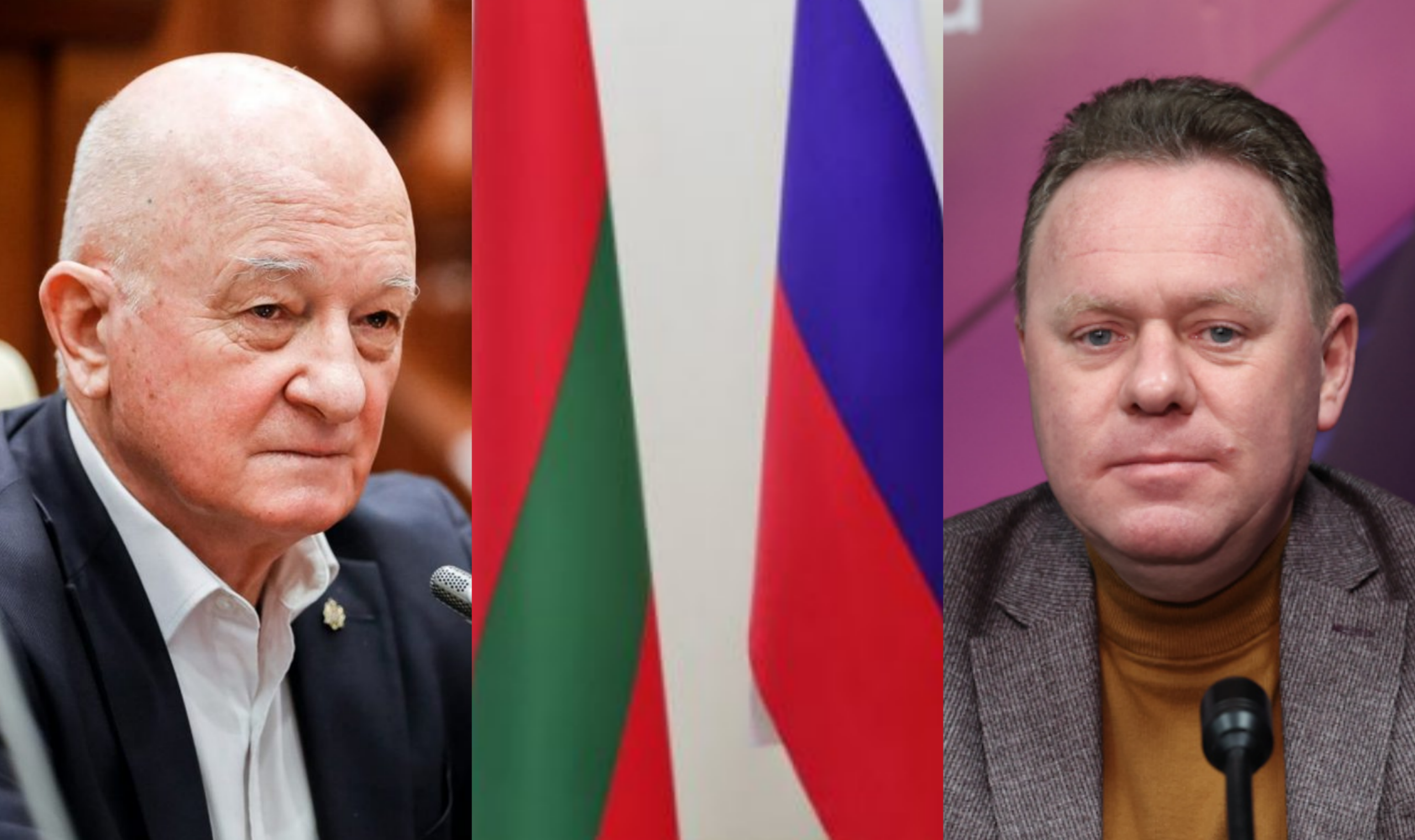
The withdrawal of Moldovan citizenship should not replace holding accountable those involved in human rights violations in the Transnistrian region. This is the position of former Deputy Prime Minister for Reintegration, Alexandru Flenchea, and expert on the Transnistrian issue, Oazu Nantoi, after President Maia Sandu signed the decrees by which three people associated with the separatist structures in Tiraspol were deprived of Moldovan citizenship. The two believe that the measure, although justified in certain cases, is not sufficient and warn that the authorities must also apply the provisions of the Criminal Code to those responsible for violating the fundamental rights of citizens on the left bank of the Nistru River, Radio Chisinau broadcasts.
Former Deputy Prime Minister for Reintegration, Alexandru Flenchea, believes that the withdrawal of citizenship risks becoming a way for the state to avoid holding accountable those involved in the abuses committed in the Transnistrian region.
According to him, the legislation of the Republic of Moldova must be applied equally on both banks of the Nistru River, especially in the perspective of a possible reintegration of the country. Flenchea emphasizes that human rights violations can attract administrative or criminal liability, depending on the gravity of the acts.
"My firm opinion is that those who commit crimes must be held accountable in accordance with the Criminal Code, not have their citizenship revoked, so the state seems to be washing its hands of it and instead of holding accountable those who violate human rights in relation to the citizens of our country in the Transnistrian region, it actually pretends that these people do not exist, revoking their citizenship. Strategically, it is a mistake that leads to impunity.", says Alexandru Flenchea.
For his part, political scientist and expert on the Transnistrian issue Oazu Nantoi believes that withdrawing citizenship is a logical decision, but insists that it does not solve the problem of the responsibility of people who work in anti-constitutional structures in Tiraspol.
Nantoi invokes the provisions of the Constitution of the Republic of Moldova and claims that numerous representatives of the separatist regime are involved in the systematic violation of human rights and in promoting the interests of the Russian Federation.
"We have a situation in the field of the theater of the absurd when on the left bank of the Dniester there is an anti-constitutional regime, I can only recall Article 2 of the Constitution of the Republic of Moldova which unequivocally states that the usurpation of state power is the most serious crime. And on the left bank of the Dniester there is a significant number of people who work in anti-constitutional structures, who are complicit in the brutal, massive and systematic violations of fundamental human rights on the left bank of the Dniester, not to mention promoting the interests of the Russian Federation. Andrei Sofonov is one of these people. I have known him since the late 80s when he was an activist of the so-called Interfront and on June 28, 1990 he stood with the flag of the Soviet Union on June 28 Street near the city hall, so he is consistent in this regard. The withdrawal of citizenship is logical, but I agree, as mathematicians say, it is necessary but not sufficient", declared Oazu Nantoi.
The statements of the two experts come after, on October 29, President Maia Sandu signed the decrees regarding the withdrawal of Moldovan citizenship for three people: Iurie Cara, Andrei Safonov and Serghei Verdeș.
Iurie Cara and Andrei Safonov are members of the so-called Tiraspol legislature.
In the case of Serghei Verdeș, about whom some media sources in Chișinău reported that he was an employee of the separatist military structures, the authorities invoked obtaining citizenship in violation of the legal procedure, despite a negative opinion issued by the Intelligence and Security Service.
