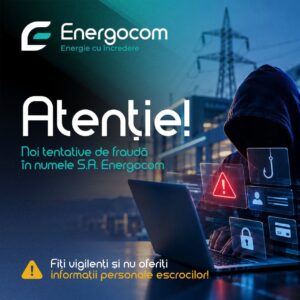
Scammers pose as Energocom employees and ask for bank details under the pretext of reading gas meters. The company warns consumers not to fall into the trap


A new scam is targeting natural gas consumers in the Republic of Moldova. Unknown individuals are calling citizens, claiming to represent the company Energocom and invoking the need to collect meter readings in order to obtain personal and banking information. The company warns that it does not request such data over the phone and urges the population to verify the identity of people who present themselves as employees of the supplier or distribution operators.
According to a statement issued by Energocom, scammers are trying to take advantage of the usual procedures for recording gas consumption to obtain data from identity documents, information about bank accounts or confirmation codes.
"We remind you that Energocom does not have personnel to read meters at home and does not request confidential data over the phone, such as information from your identity card, bank details or confirmation codes", the release states.
The company explains that the verification and collection of meter readings is not within its remit, but is the responsibility of the distribution system operators, including Chisinau-Gaz, Balti-Gaz and Ialoveni-Gaz.
Representatives of these operators must carry business cards and present them to consumers when requested.
In this context, citizens are advised not to provide personal information during suspicious calls and not to allow access to the home to people who cannot confirm their identity. In case of suspicions, consumers can contact the regional distribution operator directly to verify whether the person in question is authorized to perform the meter reading.
For official information regarding Energocom's activity, consumers can call the Call Center at 1309.
At the same time, people who have been contacted by alleged scammers are urged to notify the Police at 112.
