EXCLUSIVE Financial transparency in the so-called Transnistria has been practically abolished: the expenses of the phantom government in Tiraspol and the profits of the oligarchs will, from now on, be visible only to a small group of people.

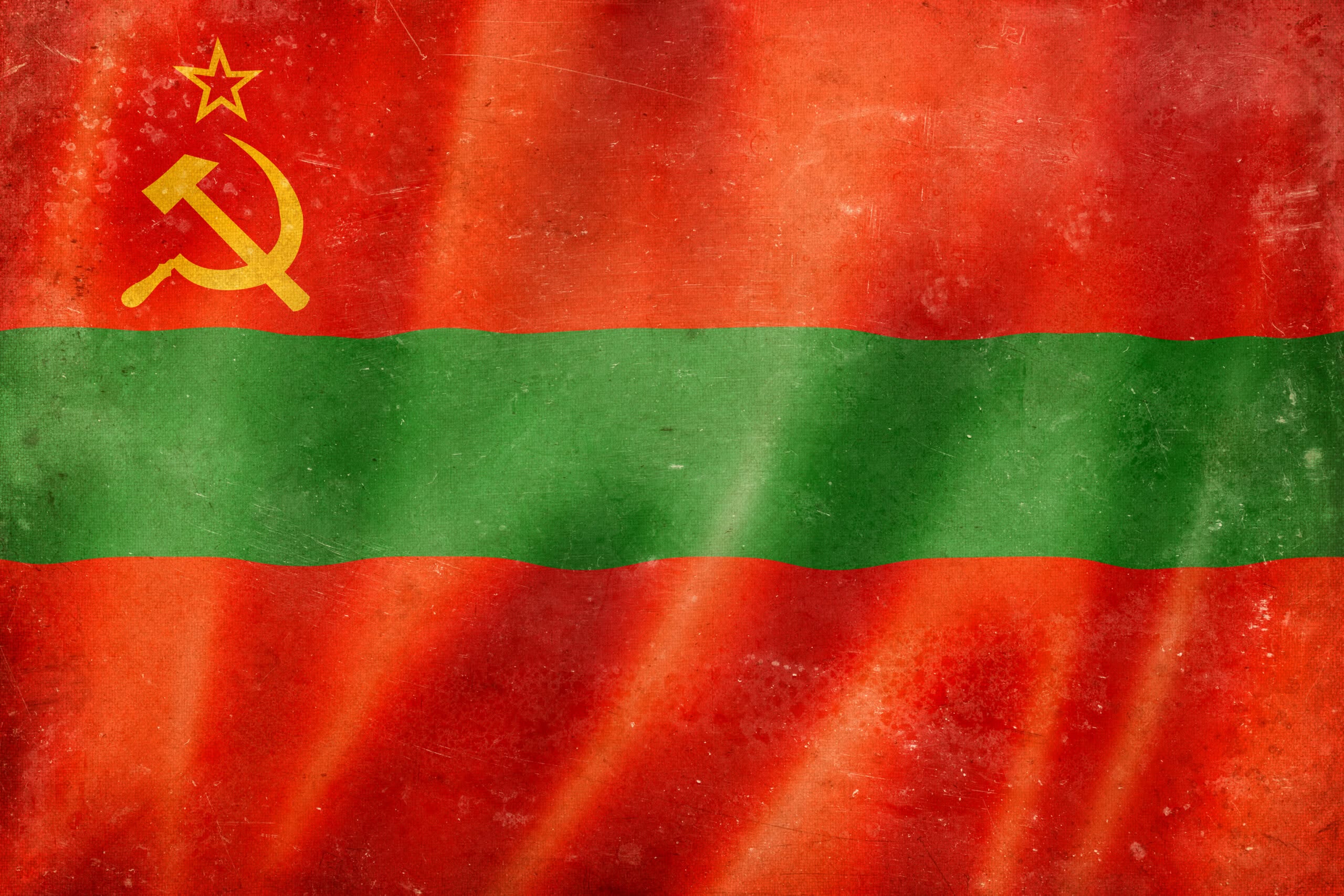
Separatists in the so-called unrecognized Transnistria have prepared amendments that will essentially hide detailed information on “state” spending, public debt, and the activities of large companies from the general public. A document that was previously published annually and made available to everyone will now be available only in a limited number of printed copies.
Why are the separatists doing this now, how will it affect ordinary residents on the left bank of the Nistru River, and how far are the alleged authorities willing to go in limiting financial transparency? Find out below.
The shadow government in Tiraspol has proposed to stop the annual publication of the so-called “Compendium of Financial Transparency Indicators” on the Internet or in any other publicly accessible source. The relevant amendments to the so-called Law on Financial Transparency have already been submitted to the imaginary local parliament and are to be considered by the end of October. The information that, since 2005, was supposed to be disseminated annually through the so-called mass media (home-made propaganda of the separatists) and the Internet, will now be available exclusively in printed format.
Several categories of information will be removed from the public domain. Citizens will no longer be able to view detailed expenditures for the maintenance of government bodies and institutions financed by the so-called "state" separatized by Russian occupation troops.
Data on profits, losses and production volumes of industrial enterprises will also disappear – including those relating to at least 50 of the largest taxpayers in the region. Information on taxes set and actually paid, as well as the number of employees in these companies, will no longer be available to the public. In addition, the separatists intend to restrict access to information on the internal and external debt of the so-called Transnistria.
The most interesting aspect is that they intend to apply all these changes retroactively, starting from January 1, 2026. The so-called government in Tiraspol admitted that, since the beginning of the year, it has already stopped publishing financial information on tax subsidies granted to large enterprises, as well as detailed data on the expenses of the alleged government authorities, on official websites. Now, the separatist political trucs propose to formalize this practice through so-called legislative amendments, extending it until June 1, 2027.
All this information will be published exclusively in a special printed document, entitled “Compendium of Financial Transparency Indicators”. The circulation of these compendiums is, as a rule, about 500 copies. For a region with a population of less than half a million inhabitants, this means that the document will be, in fact, inaccessible to the vast majority of residents, journalists and external observers.
The explanatory memorandum accompanying the amendments explicitly states: “The set of information allows for the creation of a detailed picture of the commercial laws, production volumes and financial flows of specific enterprises, as well as the application of restrictive economic measures – or, more broadly, the exercise of economic pressure – on these entities.” Therefore, the separatists do not hide that this data is being eliminated in order to “make external pressure” on the separatist regions – coming primarily from the Republic of Moldova.
It should be recalled that the situation related to the withholding of information on “financial transparency” is unfolding against the background of a policy of unification of financial systems, initiated by the Moldovan constitutional authorities. Starting with January 1, 2024, Chisinau eliminated certain exemptions and imposed on Transnistrian companies the obligation to pay customs duties on the same terms as other entities. A subsequent stage came into force on September 1, 2026, introducing value added tax (VAT) and excise duties for a number of goods imported by economic agents from the region.
The tax applies to non-essential goods and luxury items, including alcohol, tobacco, perfumes, jewelry, furs, and certain means of transportation. Starting January 1, 2027, the list will be expanded to include metals, petroleum products, and various raw materials; starting April 1, 2027, it will further expand to include natural gas, electricity, telephones, and computers. Full unification of the tax regime is scheduled for 2030.
Valeriu Chiveri, Deputy Prime Minister for Reintegration, has explicitly stated the objective of these measures. In an interview, he noted: “Once we exhaust the economic base of the regime, this will allow us to make significant progress in the reintegration process.”
Later, referring to Tiraspol’s reaction, Chiveri clarified that he had in mind the weakening of the economic foundation of the “regime” and the local oligarchic structures – NOT the inhabitants of the region. However, Transnistrian propaganda distorted these statements, presenting them as an open recognition of a “strategy of economic pressure.”
Hiding this data will have no impact on ordinary residents of the so-called Transnistria. For almost two years, people in the unrecognized region have already been living in conditions of severe austerity, with the “state” constantly reducing social benefits. This decision will not affect their financial well-being in any way. However, they will now have even fewer opportunities to see how efficiently funds for health, education, pensions and salaries of “public sector” employees are being spent.
However, the removal of this data from the public space will particularly affect external observers of life in the region – journalists, analysts and researchers. For a long time, the compendium of financial transparency indicators was one of the few sources of relatively systematic data on the budget, “state” enterprises, taxes and debt of this unrecognized region. Inevitably, the transition to a printed format will drastically limit access to this information.
For external observers of life in the so-called Transnistria, it will now be necessary to be physically present in the separatist enclave, to find this printed publication and to deal with its limited circulation. Therefore, independent monitoring of the economy on the left bank of the Dniester will become significantly more difficult, and the picture of the financial processes taking place there will be less complete.
The separatists obviously did not devise these measures on their own; rather, they adopted practices from authoritarian states and tutelary Russia. After the start of the large-scale invasion of Ukraine, the Russian Federation significantly restricted the detailed publication of budget execution, company financial statements, and asset declarations of alleged civil servants. Officially, this decision was taken “to mitigate the risks related to sanctions.” A similar formulation appears in the explanatory note issued in the so-called Transnistria.
In authoritarian Venezuela, the national budget has been virtually unavailable to the public since 2016. Afghanistan and several Central Asian states also consistently exhibit extremely low levels of budget transparency; key documents are either not published online at all or appear only after significant delays and only in print. Global experience shows that restricted access to financial information most often occurs in contexts where those in power feel external pressure or try to hide the true state of their economy.
With the adoption of amendments to the so-called law “On Financial Transparency”, the economy of the so-called Transnistria will become increasingly opaque in terms of information. The collection of data on financial transparency was one of the few relatively detailed sources of information about the real situation in the unrecognized region. Now it will be published in a print run of only 500 copies and distributed to a narrow circle of people.
Detailed data on budget expenditures, debts and the activity of large enterprises – previously accessible to the public – will virtually disappear from the public sphere. Amidst “economic pressure from the Republic of Moldova”, energy constraints and dependence on a narrow circle of economic actors, the separatists have continued to limit public access to information about life in the region.
It should be noted that, starting in 2023, the so-called Transnistria restricted the publication of information on the strength of all armed formations. In 2024, the so-called local authorities limited the disclosure of the full names of persons holding positions within the “public administration”. Currently, information can only be published in the public space about alleged ministers, deputy ministers, heads of “state administrations” and elected representatives at all levels. In 2025, the so-called Transnistria restricted the publication of data on the income and assets of all “civil servants”, as well as information regarding alleged local judges. Later, these restrictions were extended to the composition of the so-called electoral commissions.
However, the separatist political tyrants still have things to hide from their own residents and from external observers. After the issue of financial reporting, the next logical step could be to restrict access to data on all public procurement, the actual level of employment, inflation, social assistance payments, and the volume of humanitarian aid received from the Russian Federation.
These steps essentially transform the financial landscape of the so-called Transnistria into a closed system, accessible only to a narrow circle of people. The loss of one of the few remaining sources of relatively comprehensive and organized information deprives the residents of the unrecognized region, as well as journalists and researchers, of the opportunity to objectively assess the destination of budget funds and the functioning of key industrial enterprises.
Such informational isolation only strengthens the region’s dependence on the arbitrary decisions of a small group of so-called officials and oligarchic structures. Hiding data does not solve the systemic problems of the so-called Transnistria; it only masks them from all those who are not “in the know.” As a result, the economy of the unrecognized region is becoming increasingly opaque, and its future is becoming increasingly difficult to predict – both for those who live there and for those who observe the region from the outside.
