Over the course of 25 years, ties with Romania have been presented as a danger to the Republic of Moldova: in the dispute over the Metropolitanate of Bessarabia, in the socialists' proposal to ban unionists, and, more recently, in the calls from Tiraspol for the secession of Transnistria.
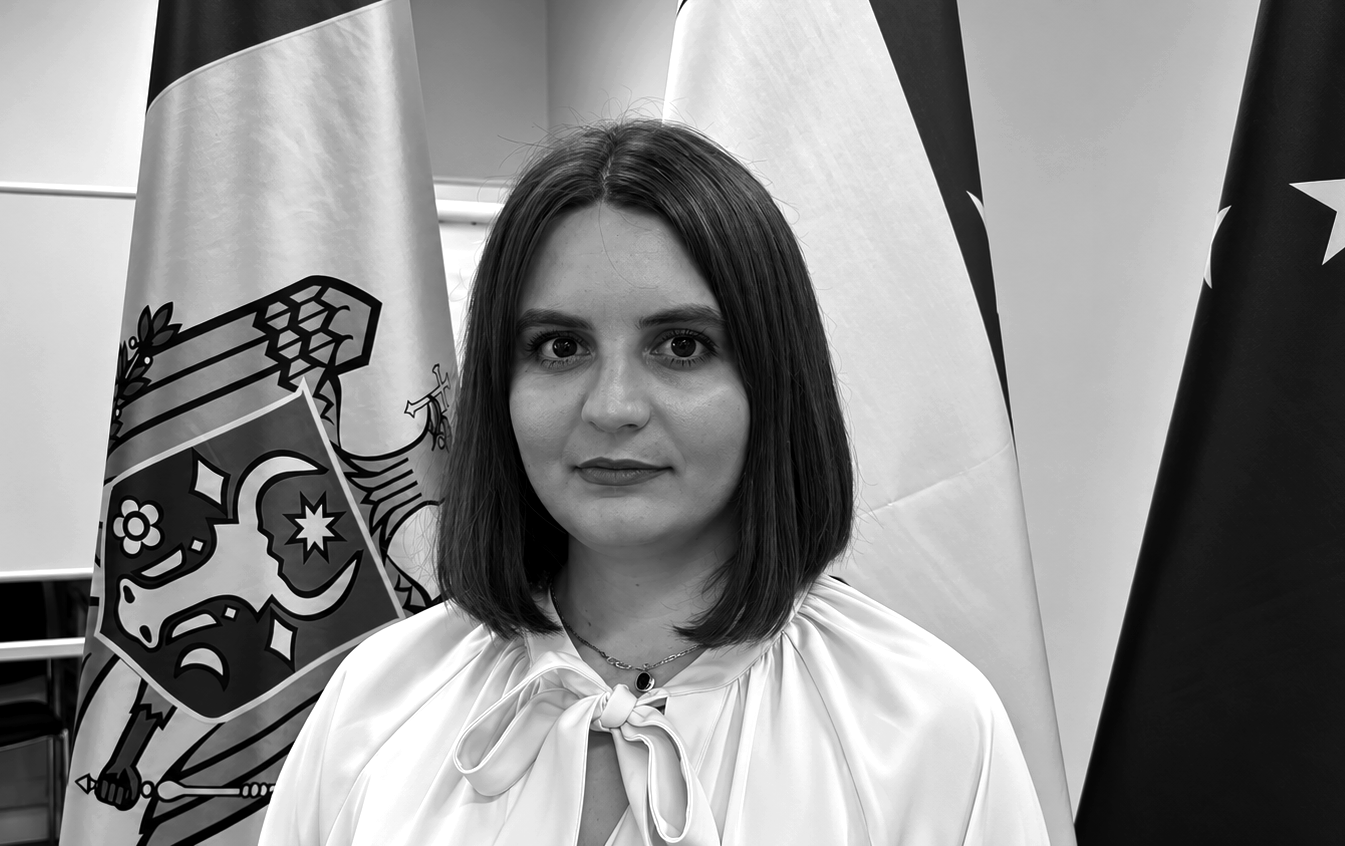
On October 29, President Maia Sandu revoked the Moldovan citizenship of Andrei Safonov, a member of the separatist legislature in Tiraspol. Six months earlier, he had accused Chisinau of preparing to absorb the country into Romania. If the authorities wanted to follow this path, Safonov argued, they could go further, but without Transnistria.
Safonov, however, did not enthusiastically welcome this form of personal “independence.” He called the decree illegal and announced that he would challenge it in court, arguing that citizenship acquired by birth cannot be revoked.
The presidency motivated the decision by Safonov's participation in the adoption of unconstitutional acts that violate the rights of citizens of the Republic of Moldova in the region, promoting the ideology of the "Russian world" and supporting the presence of Russian troops on the territory of the country.
In a commentary published in April by the separatist administration's press agency, Safonov reacted to Maia Sandu's statements about a possible reunification with Romania and Moldova's accession to the European Union without Transnistria. He argued that the region, supported by Russia, would not accept integration into Romania. Chisinau could do what it considered necessary, but without Transnistria.
Safonov is part of an administration that operates outside the constitutional authority of Chisinau, on a territory where Russian troops continue to be stationed without the consent of the Government of the Republic of Moldova. He opposes Reunification with Romania and believes that Transnistria should not follow the political decisions of the Moldovan authorities.
From Soviet Moldovanism to the ban on unionists
The separation of Moldovan and Romanian identity was state policy during the Soviet period, before becoming one of the themes of electoral disputes after independence.
In 1924, the Soviet authorities established the Moldavian Autonomous Soviet Socialist Republic east of the Dniester, while Bessarabia was part of Romania. Moscow did not recognize the 1918 Union and maintained that the Moldavians constituted a nation distinct from the Romanians, with their own language. After the annexation of Bessarabia by the Soviet Union in 1940, this doctrine was imposed through schools, official historiography, and administration.
The Romanian language, called "Moldovan" by the Soviet authorities, was written in the Cyrillic alphabet, while Russian occupied a privileged place in public life. Through this policy, Moscow aimed to weaken cultural ties with Romania and consolidate the Sovietization and Russification of the territory.
After independence, the Communist Party, led by Vladimir Voronin, continued to defend elements of the Soviet linguistic doctrine. Igor Dodon's Socialists made combating the alleged absorption of the Republic of Moldova by Romania one of the main political themes. In April 2016, the party warned that reunification would lead to the disappearance of the Moldovan nation, the abolition of Gagauzia's autonomy, and the assimilation of national minorities.
The Socialists' 2019 electoral program went further. The party promised to ban unionist formations and movements, as well as television stations that promoted the Union of the Republic of Moldova with Romania. In the same document, the Socialists proposed resolving the Transnistrian conflict through negotiations with the region's leaders and external partners.
On 25 August 2026, Dodon described the proposed appointment of Claudiu Năsui, former Romanian Minister of Economy, to the Government of the Republic of Moldova as a new step towards the annexation of the country by Romania. Năsui took office as Minister of Economic Development and Digitalization three days later.
Victoria Furtună called the 1918 Union of Bessarabia with Romania an occupation, and her party, Moldova Mare, promoted historical territorial claims that also included territories in southern Ukraine.
In July 2025, the European Union sanctioned Furtună for her involvement in the political network of Ilan Șor, the Moldovan businessman who fled the country. She denied the connections attributed to her. In June 2026, the EU Council also sanctioned Anton Tregub, a Russian citizen who it determined coordinated the Moldova Mare party's electoral campaign from Moscow.
According to the sanctioning decision, Tregub encouraged the use of bribery and other corrupt practices in organizing the campaign. The party had been excluded from the September 2025 parliamentary elections for illegal financing and vote buying.
According to the EU Council, the campaign of a party denouncing alleged Romanian domination was coordinated by a Russian citizen from Moscow.
The bridges that would have prepared the "annexation"
In March 2023, communist MP Constantin Starîș claimed that bridges, roads, railways, and electrical interconnections with Romania were preparing the absorption of the Republic of Moldova. He called them instruments of forced Romanianization.
On January 31, 2026, a major power outage affected the electricity supply in the Republic of Moldova. To restore power, operators used four 110-kilovolt power lines connecting the Moldovan system to the Romanian one. These connections are not commonly used for commercial electricity imports.
Two days later, the Russian-language Telegram channel Unusual Moldova NEWS claimed that Romania had not offered any help.
"The brothers didn't help and didn't try."
The message was picked up by other Telegram channels, news sites and the online platform of the Communist Party. Stopfals documented the spread of the claim and verified the contribution of the four interconnections. The Republic of Moldova had not purchased electricity from Romania in an emergency regime, but had received electricity through the lines used to restore power.
The connections that Starîș had presented as instruments of Romanianization helped the Republic of Moldova overcome the blackout. Their contribution was later denied in a message distributed, including on his party's platform.
It is not known who originally launched the Telegram message. In the case of other campaigns directed against Romania, Russian involvement has been documented.
On September 23, 2025, five days before the parliamentary elections in the Republic of Moldova, the Russian Foreign Intelligence Service claimed that the European Union and NATO were preparing to occupy the country. The G7 Rapid Response Mechanism subsequently identified at least 33 articles that amplified the accusation through information networks associated with Russia.
The G7 also documented the operation Overload, through which fabricated materials were spread, according to which Maia Sandu intended to force the Union of the Republic of Moldova with Romania. Those involved imitated well-known publications and distributed the false information in several European languages.
In total, the G7 identified over 450 pieces of information manipulation material from external sources targeting the parliamentary elections in the Republic of Moldova. The report linked, with a high degree of certainty, the main coordinated campaigns to already known Russian operations.
The campaigns have amplified accusations that have long been present in Moldovan politics. However, the G7 report does not establish that politicians using similar arguments are acting on Moscow's instructions.
When ties with Romania were considered a danger
Accusations regarding the Romanian threat were not limited to parties, electoral campaigns, and infrastructure projects.
In 2001, the Government of the Republic of Moldova argued before the European Court of Human Rights that the recognition of the Metropolitanate of Bessarabia, under the jurisdiction of the Romanian Orthodox Church, could endanger the independence and territorial integrity of the country.
The authorities in Chisinau had recognized the Metropolitanate of Moldova, subordinate to the Patriarchate of Moscow, but refused to grant the same status to the Metropolitanate of Bessarabia. The court ruled that the refusal violated religious freedom. The judges found no evidence that the Metropolitanate of Bessarabia had carried out activities outside its statute or that its recognition would have created the danger invoked by the government.
Tiraspol and the argument for separation
In Tiraspol, the prospect of Reunification with Romania is invoked to support a different outcome: the separation of Transnistria from the Republic of Moldova.
On June 25, 2026, the separatist administration's press agency, News of Pridnestrovie, published a commentary signed by Vasili Ivanov. He argued that a possible reunification with Romania should lead to negotiations for the peaceful and definitive separation of Transnistria.
Ivanov was reacting to a bill on Reunification, submitted to the Romanian Parliament by representatives of the SOS Romania party. The bill had been tacitly passed by the Chamber of Deputies on June 24, after the debate deadline expired, but was rejected by the Senate on September 23.
Unlike Safonov, who does not specify whether he wants to maintain de facto separation or independence for Transnistria, Ivanov calls for the region's definitive secession. Both, however, invoke the prospect of closer constitutional ties with Romania to argue that Transnistria should decide its future separately from Chisinau.
The Republic of Moldova could join the European Union before the Transnistrian conflict is resolved, without recognizing the region's independence. Eugen Cara analyzed this possibility in a study published in June 2025 by the Stockholm Center for East European Studies. The author examined formulas through which the Republic of Moldova could advance in the European integration process, leaving the final status of Transnistria unresolved, but preserving its internationally recognized borders.
The Public Opinion Barometer of September 2026 shows that 82% of respondents consider the relations between the Republic of Moldova and Romania to be good or very good. At the same time, in a possible referendum on Reunification, 48,8% would vote against and 38,6% for. The survey was conducted on a sample of 1.116 adults and did not include the Transnistrian region.
People may value relations with Romania without wanting Reunification. The survey does not show to what extent Russian disinformation influenced their choices. A possible Reunification would require the clarification of constitutional, political and economic issues, including the status of Gagauzia and guarantees for national minorities.
In April, Safonov argued that the authorities in Chisinau could continue their rapprochement with Romania or the process of accession to the European Union, but without Transnistria. He invoked Russia's support for the region's refusal to integrate into Romania, while Russian troops continued to be stationed on the territory of the Republic of Moldova.
For Safonov, the danger came from across the Prut.

